
Shrimp and crab frequently soft shell, difficulty in molting? The key is not just calcium supplementation
Shrimp and crab frequently soft shell, difficulty in molting? The key is not just calcium supplementation
In the process of shrimp and crab farming, long soft shell time, slow hard shell speed, irregular molting and difficulty in molting are relatively common farming problems.
After these situations occur, many farmers first think of sprinkling calcium agent into the water. But if the water mineral indicators are basically normal and the problem still recurs, it is necessary to re-evaluate thefeed nutrition and internal reserves。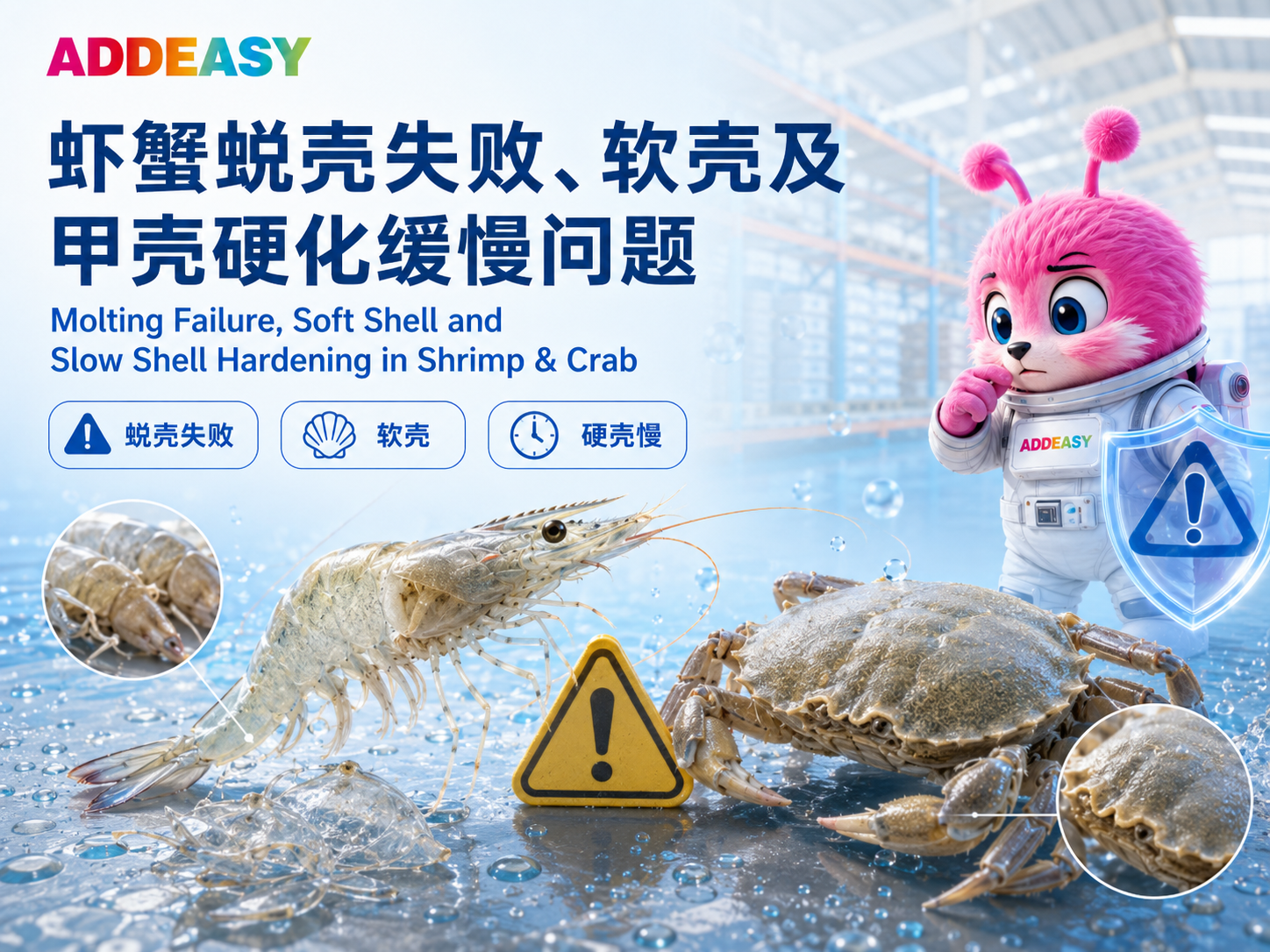
Why can't shrimp and crab new shell hardening only rely on sprinkling calcium?
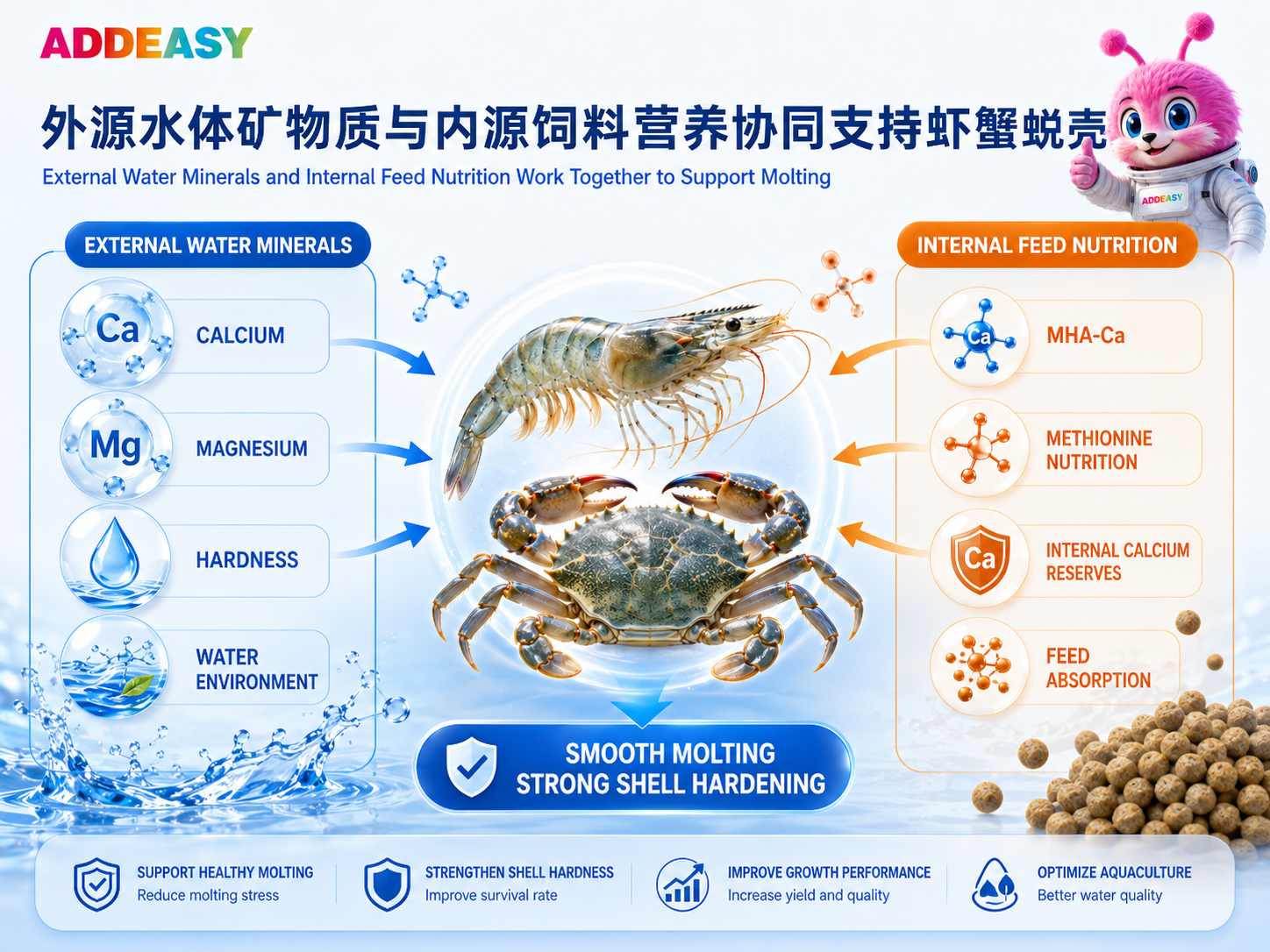
After shrimp and crab molt, new shell hardening requires the joint participation of internal and external nutrient sources.
External water conditions
Mineral ions such as calcium and magnesium in water can provide an external mineral basis for new shell calcification. Suitable water quality, dissolved oxygen, pH and mineral levels are very important for the recovery after molting.
Internal nutrient reserves
Shrimp and crab also need to obtain methionine, protein, minerals and other nutrients through feed for tissue growth, synthesis of crustacean-related substances and recovery during molting.
Therefore, simply increasing the calcium content in water cannot completely solve the soft shell problem caused by unbalanced feed nutrition or insufficient internal reserves.
What is Calcium Hydroxy Methionine?
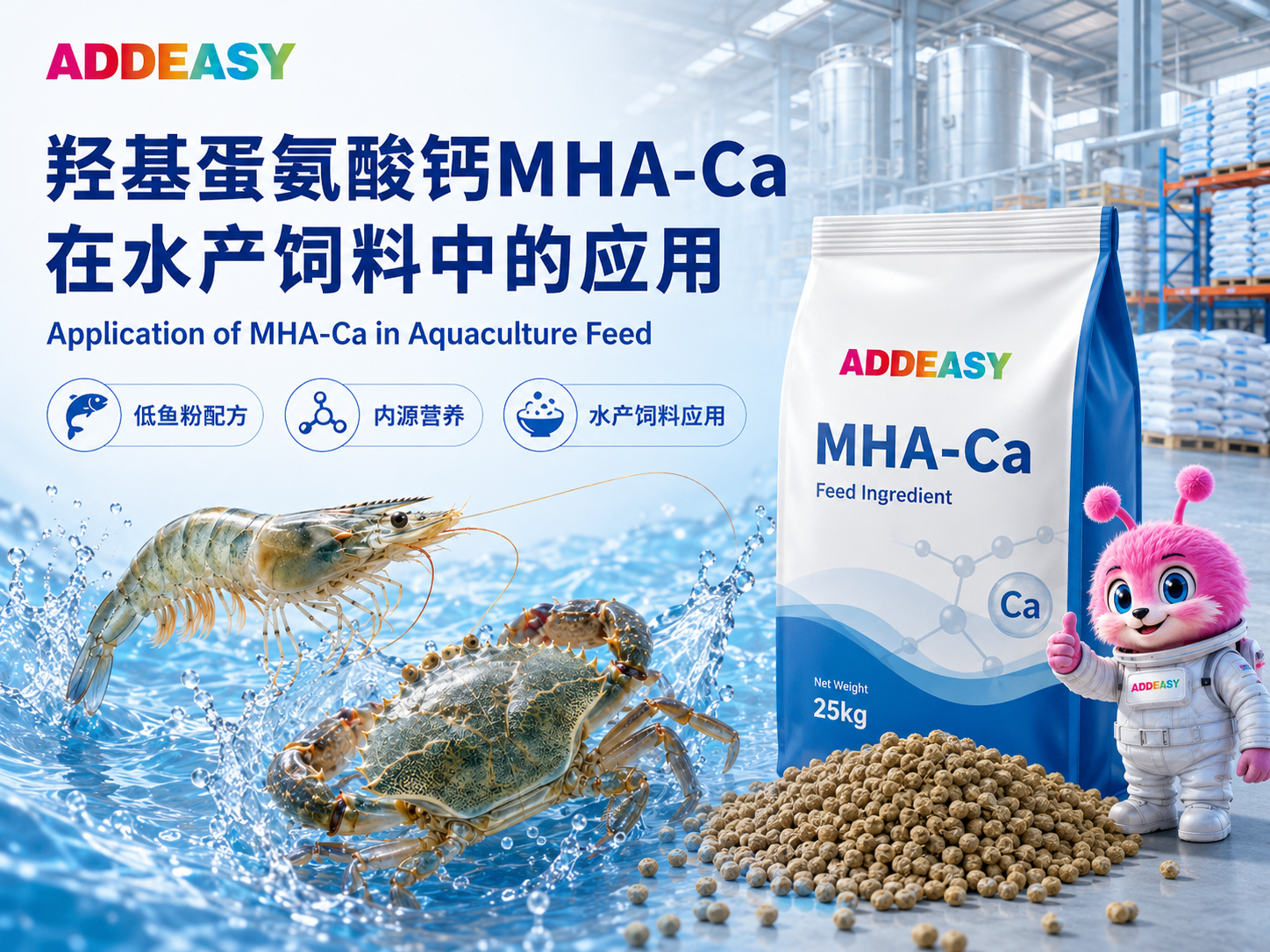
Calcium Hydroxy Methionine, abbreviated as MHA-Ca, is the calcium salt of a hydroxy methionine analog and can be used as a nutritional raw material in aquafeeds.
Its application characteristics are to provide simultaneously:
- Methionine nutritional source;
- Organic calcium source.
After entering the animal body, related components can participate in methionine metabolism and calcium nutrition supplementation, so it has a different application orientation from calcium supplement products simply used for water spraying.
Application Value of Calcium Hydroxy Methionine in Shrimp and Crab Feeds
1. Supplement methionine and balance feed nutrition
Methionine is an important amino acid required for the growth and protein synthesis of aquatic animals.
When there is a lack of methionine in the diet or an unbalanced amino acid ratio, it may affect protein utilization and growth performance. Reasonably supplementing methionine sources helps improve the amino acid structure of the feed and supports the normal growth of shrimp and crabs.
2. Provide organic calcium and support internal mineral reserves
Shrimp and crabs need to establish mineral reserves in advance before molting.
Calcium Hydroxy Methionine can provide a calcium source through the feed, as an endogenous nutritional support in addition to water body mineral supplementation, helping to establish a dual management idea of "external water body supplementation + endogenous feed supplementation".
3. Support nutrition and recovery during the molting period
The molting period is usually accompanied by changes in feeding, metabolism, and environmental stress.
Reasonable supply of methionine, protein, calcium, and micronutrients can provide a nutritional basis for tissue growth, new shell formation, and post-molting recovery of shrimp and crabs.
It should be noted that Calcium Hydroxy Methionine is not a therapeutic product, and the actual application effect will also be affected by factors such as the basic diet, water quality, dissolved oxygen, diseases, and aquaculture management.
What factors should be paid attention to in shrimp and crab molting management?
When soft shell or unsuccessful molting occurs, it is recommended to check simultaneously:
- Water body calcium, magnesium, alkalinity and pH;
- Dissolved oxygen and sediment conditions;
- Balance of feed protein and amino acids;
- Calcium, phosphorus and trace element levels;
- Feed intake and intestinal condition;
- Shrimp and crab specifications and molting cycle;
- Whether there are pathogens, stress or water quality mutations.
Single calcium supplementation usually cannot cover all problems. A more reasonable method is to make a comprehensive judgment according to water body detection, feed formula and breeding performance.
Jiayijia Group's Aquatic Nutrition Application Ideas
Jiayijia Group focuses on organic acids, amino acid nutrition, mineral nutrition and aquatic feed application, and provides targeted raw material and nutrition program support for feed enterprises and aquaculture customers.
For shrimp and crab molting and soft shell management, evaluation can be carried out from the following two directions:
**External management:** Optimize water quality, dissolved oxygen and water body mineral conditions.
**Internal nutrition:** Supplement methionine, organic calcium and related nutrients through feed.
Through internal and external coordination, it can more comprehensively support shrimp and crab molting, new shell hardening and breeding stability.
Common problems
Is shrimp and crab soft shell necessarily due to calcium deficiency?
Not necessarily. In addition to insufficient calcium in the water body, soft shell may also be related to insufficient methionine or protein nutrition, unbalanced mineral ratio, dissolved oxygen, water quality, diseases and breeding stress.
Can calcium application in water body replace calcium supplementation in feed?
It cannot be completely replaced. Calcium supplementation in water body mainly improves the external mineral environment, while feed nutrition helps shrimp and crab establish internal nutrient and mineral reserves. The application directions of the two are different.
What is the function of calcium hydroxymethionine?
Calcium hydroxymethionine can be used as a nutritional source of methionine and organic calcium to improve the amino acid and mineral nutrition program of aquatic feed.
How much calcium hydroxymethionine should be added?
The addition amount needs to be determined according to product content, animal variety, growth stage, basic formula and local feed regulations. It is not recommended to directly apply a unified dose without departing from the actual formula.
Conclusion
The molting and new shell hardening of shrimp and crab is a comprehensive process involving water body environment, minerals, amino acids and overall nutrition.
When frequent soft shell or unsuccessful molting occurs, one should not only focus on calcium application in water body, but also check methionine, protein, organic calcium and other nutrients in feed. Through the coordination of external water body management and internal feed nutrition, it is more conducive to establishing a stable molting management plan for shrimp and crab.